
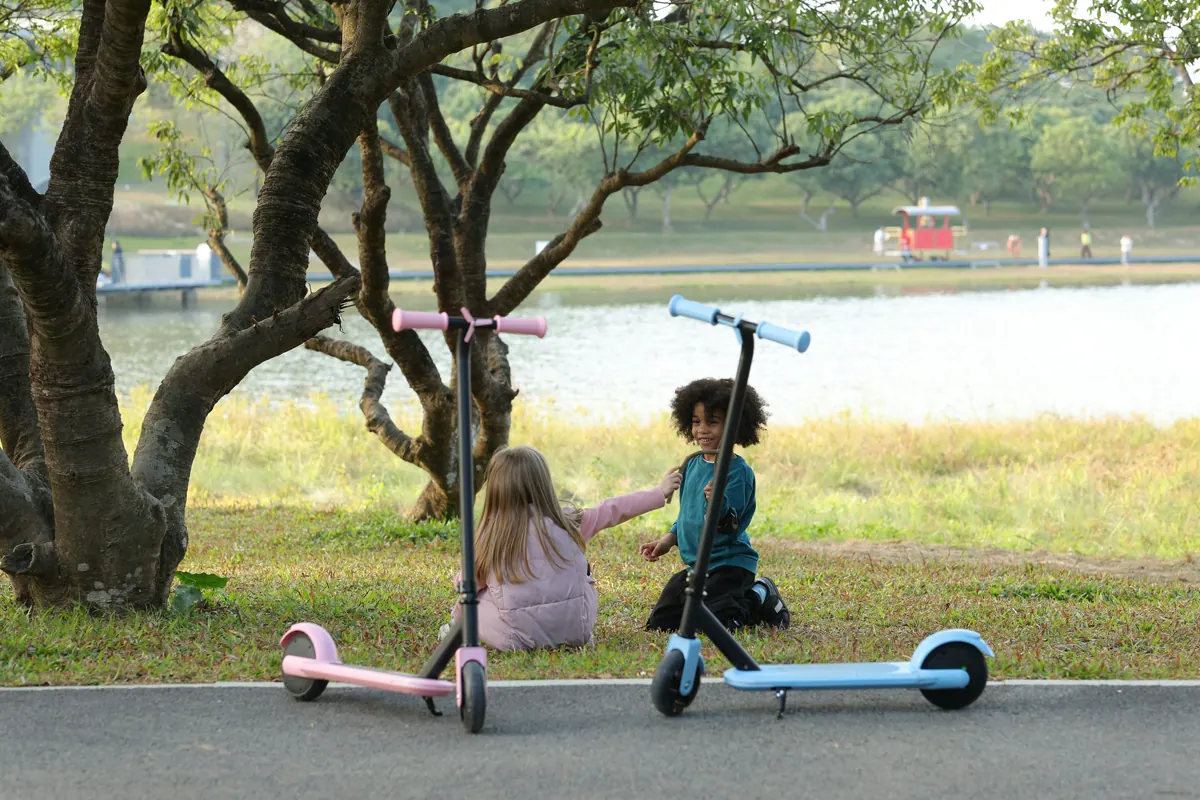
Princeton residents have been seeing the same thing for months.
Kids on electric scooters near busy roads. E-bikes cutting through intersections. Riders crossing near Walmart and U.S. 380. Parents arguing online about whether the problem is reckless kids, absent supervision, missing sidewalks, or a city that has not caught up to what is already happening on the streets.
Now the issue is going to City Council.
On Monday, May 11, Princeton City Council is scheduled to discuss electric micro-mobility regulations during the 6 p.m. pre-council work session. The memo from Police Chief James Waters says the proposed ordinance would establish regulations for electric micro-mobility devices, including e-scooters and e-bikes.
The stated reason is direct: the city is responding to a “rising incidence of accidents involving juveniles” operating motorized transportation devices while unsupervised or failing to pay proper attention.
That is the sentence that turns this from neighborhood chatter into city policy.
Quick Read
- Princeton City Council will discuss e-bike and e-scooter regulations on May 11.
- The police memo says the issue involves rising accidents with juveniles using motorized transportation devices.
- Residents have reported kids riding near Walmart, U.S. 380, Monte Carlo, 4th Street, school routes, sidewalks, and intersections.
- The proposed direction is about public safety, enforceability, and legal defensibility.
- The memo says there is no financial impact tied to the item.
- Council is being asked for direction, not just a casual discussion.
- The bigger question is how Princeton regulates a fast-growing safety issue before a worse incident forces the city’s hand.
The Pattern Residents Keep Seeing
The dominant pattern is not one scooter.
It is the number of places residents are seeing the same behavior.
Walmart. U.S. 380. Monte Carlo. 4th Street. School routes. Sidewalks. Intersections. Neighborhood roads.
In local Facebook groups, residents have described children crossing busy roads, causing cars to brake suddenly, riding into traffic, passing stopped vehicles, and moving through intersections without the judgment drivers expect from someone sharing the road. Some residents blame the devices. Others blame parents. Others point to Princeton’s sidewalk gaps and road design.
All of those concerns are now meeting one city question: what rules should exist?
What City Hall Is Taking Up
The police memo frames the proposed ordinance around public safety and responsible use. It says the goal is to create a comprehensive framework for electric micro-mobility devices while addressing “emerging transportation trends.”
That matters because these devices are not rare anymore.
They are part of daily movement for kids and teens. They are used for school routes, neighborhood trips, quick rides to stores, and crossing areas that were designed around cars, not small electric devices moving at bicycle or near-motorbike speeds.
That creates a real enforcement problem.
If a child rides a scooter into traffic, is that a parenting issue, a police issue, a traffic issue, a school-route issue, or a city ordinance issue? Right now, residents are treating it as all of the above. The city memo suggests Princeton is preparing to define it more clearly.
Why The Rules Matter
The practical impacts are easy to understand.
Drivers are afraid of hitting kids. Parents are worried about injuries. Pedestrians are worried about scooters on sidewalks. Residents near busy corridors are seeing children move through traffic conditions that already feel unsafe for adults in cars.
The city also has to think about enforceability. A rule that cannot be enforced will not change much. A rule that conflicts with state law creates legal problems. A rule that is too weak leaves residents asking why council discussed the issue at all.
That is why the memo’s wording matters. It specifically says the ordinance should improve enforceability and legal defensibility while protecting children and the public.
This is not only about banning or allowing scooters.
It is about age, supervision, speed, road use, sidewalk use, school-area safety, intersections, and whether police have clear authority when riders create danger.
The Growth Problem Behind It
Princeton is growing fast, and that growth has changed how streets function. Roads that once felt local now carry heavier traffic. Corridors near stores and schools are more crowded. Kids are using new devices in a city where infrastructure has not fully caught up.
Residents should watch what council says on May 11.
The discussion will show whether Princeton is moving toward strict limits, education, enforcement tools, age rules, helmet expectations, roadway restrictions, or a broader ordinance that gives police clearer options.
The warning has already been public.
Residents have been saying the same thing in different ways: someone is going to get hurt.
Final Take
City Hall is now taking up the issue before that warning becomes the story.