


Scroll to the Quick Read below.
If you live in Princeton, you have probably already felt the pressure behind this election before seeing a single campaign post.
Growth is speeding up. Roads are under strain. City leadership has been under scrutiny. Residents are asking harder questions about transparency, professionalism, infrastructure, and what kind of city Princeton is becoming.
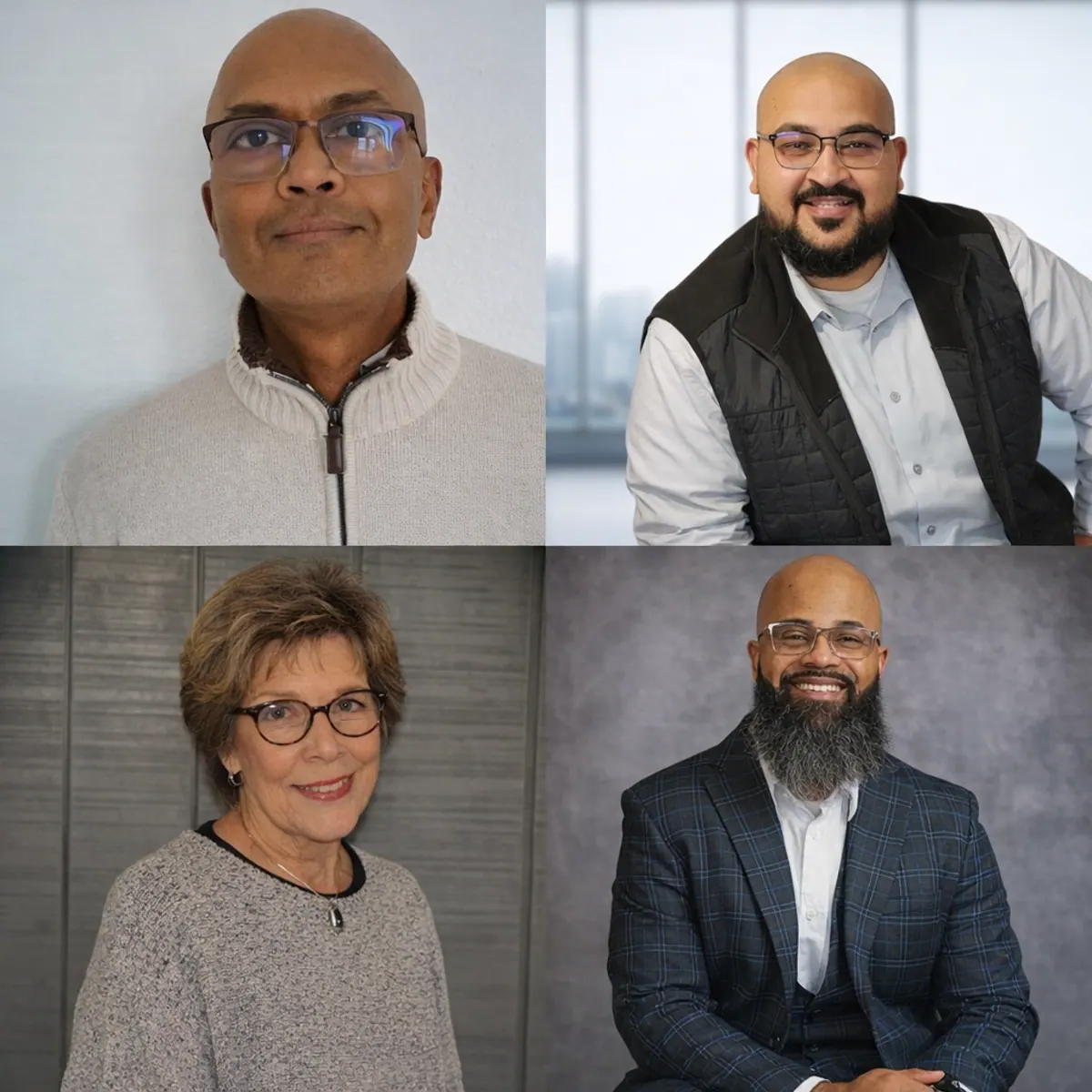
That is the backdrop for the City Council Place 4 special election. Early voting begins Monday, April 20, 2026, and runs through April 28. Election Day is Saturday, May 2. Four candidates are on the ballot to fill the unexpired term: Sharad Ramani, Jan Goria, Jaisen Rutledge, and Hassan Abdulkareem.
Quick Read
- Early voting for Princeton’s Place 4 special election begins April 20, 2026, and runs through April 28. Election Day is May 2, 2026.
- The four candidates are Sharad Ramani, Jan Goria, Jaisen Rutledge, and Hassan Abdulkareem.
- Sharad Ramani’s public campaign centers on fiscal oversight, transparency, utility billing, PID scrutiny, commercial growth, and a prepared, professional council model.
- Jaisen Rutledge’s public campaign centers on governance experience, process knowledge, transparency, structured systems, and collaboration between residents, council, and staff.
- Jan Goria’s public campaign centers on responsible growth, preserving Princeton’s character, infrastructure, transparency, public safety, and direct resident contact through town halls and neighborhood outreach.
- Hassan Abdulkareem’s public campaign centers on infrastructure-first growth, public safety staffing, planning accountability, local quality of life, and keeping more spending inside Princeton.
The Big Number
The number that defines this race is simple:
4
Four candidates are asking voters for one seat at a moment when Princeton is dealing with fast growth, strained infrastructure, and a public demand for stronger oversight.
That matters because this race is not happening in a quiet period. It is happening while residents are paying closer attention to city decisions and asking whether Princeton’s government is keeping up with the city Princeton has become.
How To Compare The Field
The cleanest way to compare these candidates is not by slogan. It is by four practical tests tied to the kind of seat Princeton is filling right now.
1. Direct city-government experience
Has the candidate worked inside Princeton’s boards, committees, or public process?
2. Policy specificity
Has the candidate moved beyond broad values and laid out concrete issue positions or operational ideas?
3. Public record of advocacy or service
Is there a visible record of work, issue engagement, or civic involvement residents can point to?
4. Governing style
Does the candidate present as a checker, a collaborator, a systems builder, or a neighborhood advocate?
Those four tests do not tell voters who to choose. But they do make the field easier to see clearly.
The Pattern In This Race
A clear pattern emerges once the candidates are placed side by side.
Two of the candidates, Sharad Ramani and Jaisen Rutledge, are presenting themselves as process-heavy candidates. Both lean hard into governance structure, oversight, transparency, and how city government should operate. Ramani’s campaign materials stress due diligence, fiduciary discipline, utility billing, PID scrutiny, and commercial tax-base diversification. Rutledge’s public message stresses governance experience, transparency systems, structured collaboration, and process knowledge.
Jan Goria and Hassan Abdulkareem are presenting more from the resident-pressure side of the race. Goria’s campaign centers on preserving Princeton’s charm, responsible growth, road and infrastructure concerns, transparency, and direct representation. Abdulkareem’s campaign centers on practical leadership, infrastructure, public safety, smarter development, local amenities, and the idea that Princeton should become a more complete city instead of one residents constantly leave to spend time and money.
That does not mean one pair is serious and the other is not. It means the public framing is different. Some candidates are telling voters, “I know the machinery.” Others are telling voters, “I am responding to what residents are living with.”
Sharad Ramani
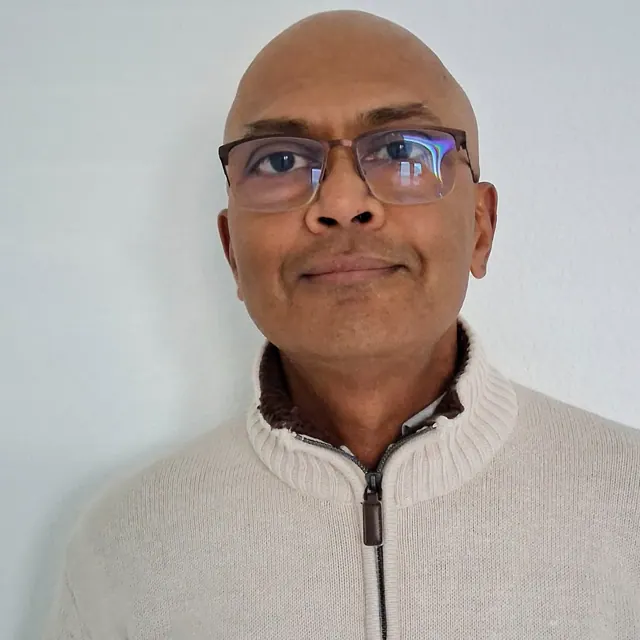
Sharad Ramani’s campaign is the most explicitly financial and oversight-driven of the four.
His campaign site says he has more than 30 years of professional experience in global procurement and strategic sourcing and has managed annual budgets exceeding $500 million. His public message centers on fiscal responsibility, transparency, lower utility costs, smart growth, and fiduciary scrutiny of city proposals. His public materials also repeatedly stress Winter Quarter Averaging, PID transparency, commercial tax-base diversification, and a council model built around preparation rather than passive approval.
The strongest argument in his favor is clarity. Among the four, he has one of the clearest issue-specific public records. He is not running on broad frustration alone. He is running on detailed public arguments about budgets, rates, city process, and what he thinks council should do differently.
The risk for voters to weigh is style. Ramani’s public posture is forceful, highly evaluative, and built around scrutiny. For some voters, that reads as exactly what Princeton needs. For others, it may raise the question of whether strong oversight would translate into productive coalition-building on a seven-member council.
Jaisen Rutledge
Jaisen Rutledge is the candidate with the most visible recent city-structure experience in the public material reviewed.
KERA reports that his ballot application lists his occupation as vice president. Public city records show he previously chaired the Princeton Community Development Corporation and serves on the Home Rule Charter Committee, which city reporting and committee coverage identify him as chairing. His campaign language repeatedly returns to process, integrity, resident voice, transparency, measurable systems, and a collaborative model that understands both residents and staff.
The strongest argument in his favor is governing familiarity. Rutledge’s message is built around the claim that city government is more complex from the inside than it looks from the outside, and that experience with process, boards, and staff relationships matters.
The risk for voters to weigh is specificity versus structure. He offers frameworks and system ideas, but some residents may still want sharper, shorter answers on what he would prioritize first if elected.
Jan Goria
Jan Goria’s campaign is the most explicitly neighborhood-facing and tradition-conscious of the four.
Her campaign website emphasizes preserving Princeton’s character, responsible growth, government transparency, infrastructure, public safety, and direct representation. Her public messaging stays close to what residents are feeling on the ground, especially road conditions, planning concerns, traffic, and the belief that growth has often moved ahead of infrastructure. Her site also highlights town halls and direct resident contact before major votes.
The strongest argument in her favor is alignment with visible resident frustration. Goria’s campaign language is easy to understand and directly tied to common local complaints: traffic, roads, safety, infrastructure, and whether Princeton is losing its identity too quickly. Her site also includes visible supporter testimonials that explicitly frame her as Christian and conservative.
The risk for voters to weigh is depth of operational detail. Compared with Ramani and Rutledge, Goria’s public materials place less emphasis on internal systems and more emphasis on values, growth caution, and direct responsiveness.
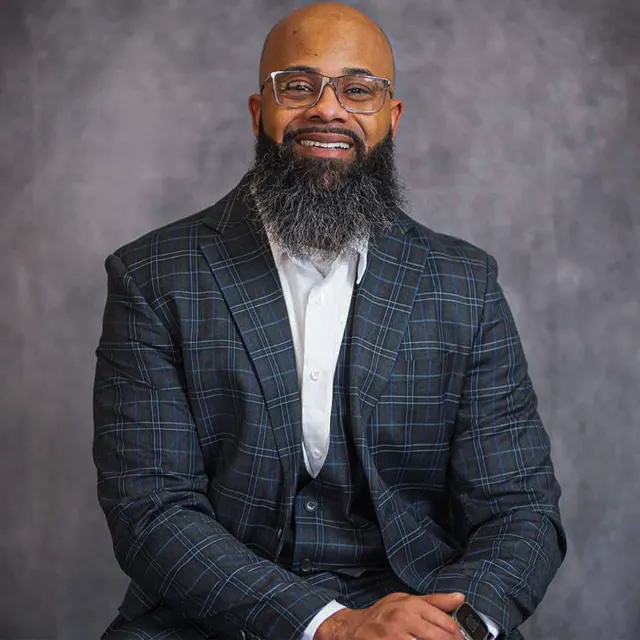
Hassan Abdulkareem
Hassan Abdulkareem’s campaign is built around practical, issue-specific concerns tied directly to daily life in Princeton.
In public messaging and a detailed campaign video reviewed by TPJ, he frames the race around infrastructure, public safety, economic development, and planning accountability. KERA reports his ballot application lists his occupation as business professional. In the messaging reviewed for this story, he also identifies himself as a local general manager and explicitly notes that he does not have prior committee or board experience.
His strongest policy positions are direct.
He calls for a five-year road improvement plan based on an existing pavement assessment he says has already been completed but not acted on. He raises concern about police staffing, stating that Princeton has 47 officers total, with only 4 to 5 on a shift, and argues that growth has outpaced staffing. He also points to the city’s zoning authority under state law and argues Princeton should require stronger development standards, including lot size, setbacks, and usable open space.
On economic development, he argues that Princeton is losing sales-tax revenue daily as residents leave the city for dining and entertainment, and he supports using Chapter 380 tools to actively recruit those businesses.
The strongest argument in his favor is specificity combined with accountability framing. His message is built around identifying known problems, pointing to existing data or authority, and arguing that the issue is not awareness but action.
The risk for voters to weigh is experience. He openly states he does not have prior city-government roles, which makes this a clear outsider candidacy centered on execution and responsiveness rather than institutional familiarity.
Where The Candidates Seem To Lean
A useful way to understand the field is to look at what each candidate appears to emphasize most in public.
Ramani leans toward oversight, fiscal scrutiny, due diligence, and commercial tax-base strategy.
Rutledge leans toward process knowledge, governance structure, collaboration, and resident access inside systems.
Goria leans toward responsible growth, protecting community character, infrastructure responsiveness, and direct neighborhood representation.
Abdulkareem leans toward practical quality-of-life concerns, stronger planning, infrastructure, public safety, and a more complete local economy.
That is where the race becomes clearer. This is not four versions of the same candidate. It is four different theories of what Princeton most needs from this seat right now.
What This Means For Voters
If you think Princeton’s biggest problem is weak oversight, Ramani’s message is built for that.
If you think Princeton needs someone who already understands internal city process and can work structurally from day one, Rutledge’s message is built for that.
If you think Princeton needs a resident-first brake pedal on growth and stronger attention to roads, safety, and neighborhood character, Goria’s message is built for that.
If you think Princeton needs practical leadership focused on daily life, planning, public safety, and making the city more livable, Abdulkareem’s message is built for that.
None of that tells residents how to vote. It tells them what question they are really answering when they vote.
Final Take
Early voting starts Monday. Four candidates are asking Princeton residents for one open seat. The race is happening at a moment when the city is under real growth pressure, and the public material surrounding the candidates points to four distinct ways of reading Princeton’s needs.
Some candidates are running on oversight. Some are running on systems. Some are running on neighborhood protection. Some are running on practical quality of life.
That is the real shape of this election.
And if voters go into this race without a clear sense of which problem they most want this seat to help solve, they are more likely to vote on name recognition than on fit.
That is how cities drift.