
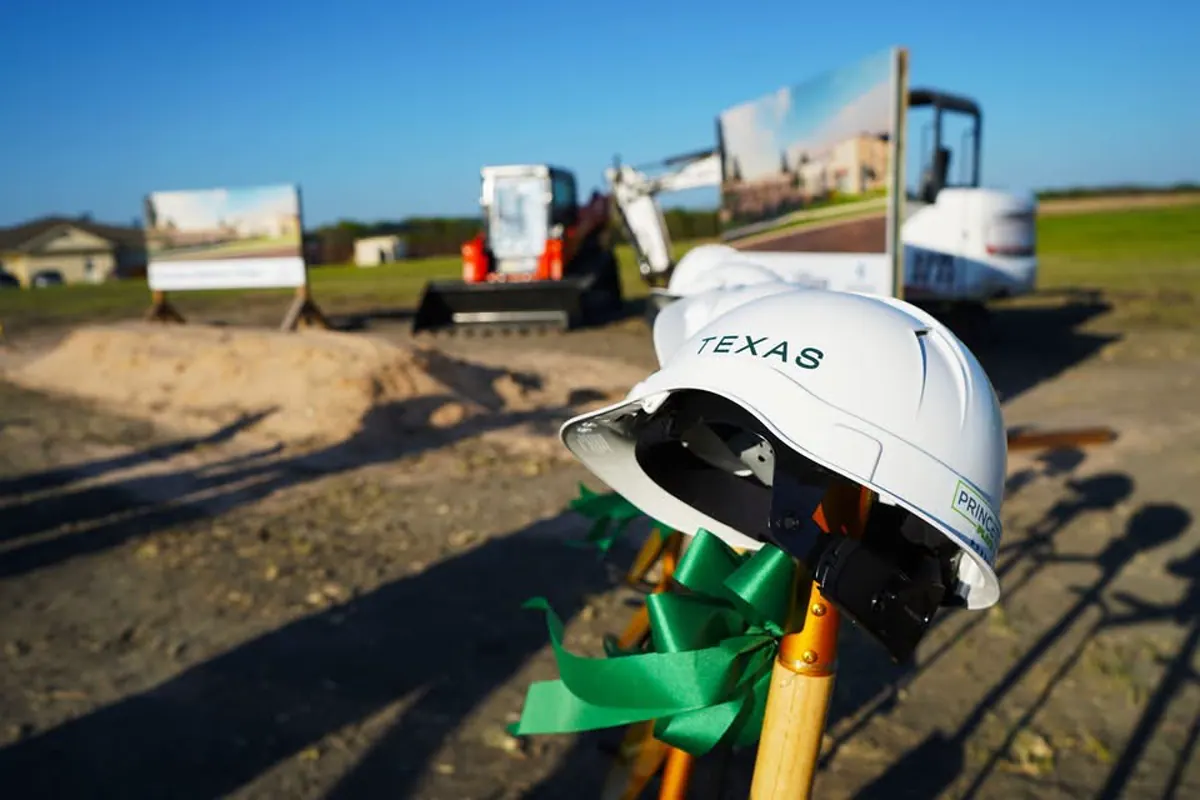
From doctors’ offices to imaging and family care, here’s what Princeton’s first major medical office project appears designed to bring
Princeton has already broken ground on its first true medical office development, but the bigger story goes beyond the start of construction. This project offers one of the clearest signs yet of what kind of city Princeton is trying to become.
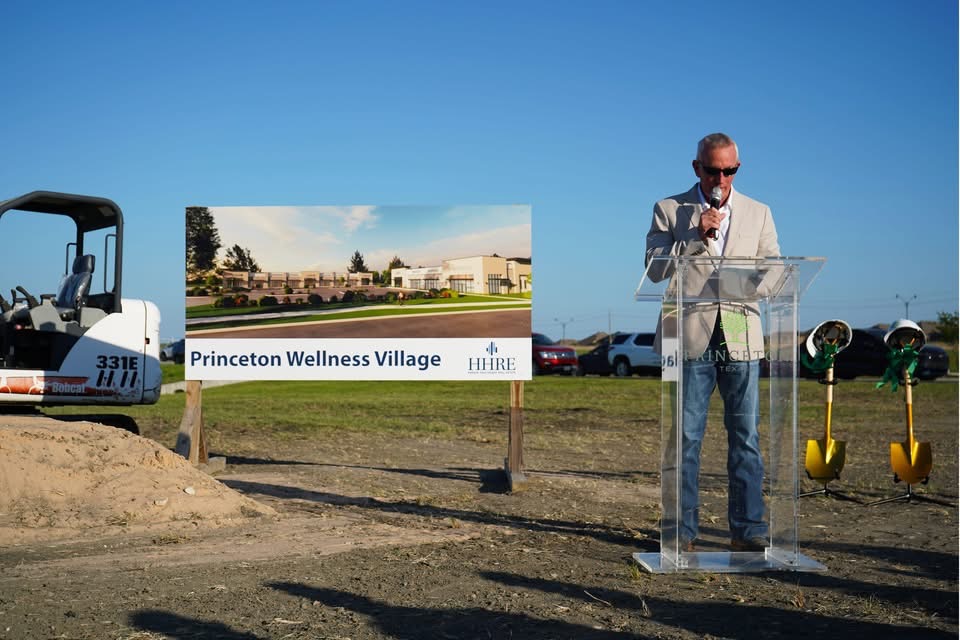
Planned in Princeton Professional Park at South Beauchamp Boulevard and Corporate Drive, the development is expected to bring roughly 25,000 square feet of medical office space across two buildings on about 2.7 acres. City materials say it is expected to include 8 to 12 medical suites and is being developed by Harrod Healthcare Real Estate in partnership with the Princeton Economic Development Corporation. Completion is anticipated by the end of 2026.
That matters because this appears to be a healthcare project designed with intention from the ground up. Leasing materials describe it as an outpatient healthcare facility with direct exterior entrances, strong signage visibility, access from both Beauchamp Boulevard and Corporate Drive, and 132 parking spaces. One building is listed at about 17,500 square feet and the other at about 8,700 square feet, bringing the combined total to about 26,200 square feet.
Taken together, those details point in a clear direction.
This does not resemble a single office building built for one provider. It looks far more like a small medical village designed for multiple practices operating side by side. The suite count suggests that. The layout strengthens it. Separate entrances, flexible suite sizes, one story construction, and substantial parking all fit the kind of development built to support several outpatient users at once. That is still an inference, but it is a strong one based on how the project is being built and marketed.
So what kinds of services is Princeton most likely making room for?
The clearest answer is everyday outpatient care, the kind people use regularly rather than a hospital campus built for overnight treatment. The city and leasing materials repeatedly frame the project as medical office and outpatient space. In practical terms, that usually means places people visit for appointments, routine care, same day services, follow ups, imaging, therapy, dental work, and similar needs.
Based on the project’s size, suite structure, and concept rendering, the most likely uses include primary care, pediatrics, dental, orthopedics, imaging, therapy, wellness services, and possibly walk in style care. The rendering itself includes labels such as dental, radiology, ortho, clinic, walk in, and wellness. Those are not confirmed tenants, but they do reveal the type of use the development is clearly being shaped to support.
For residents, that distinction matters. Princeton does not need every healthcare gap solved at once for this project to have real value. What matters first is whether it begins bringing more basic and repeat use care into the city itself.
For years, one of Princeton’s clearest weaknesses has been the mismatch between population growth and service growth. Houses have gone up quickly. People have arrived quickly. Yet many everyday needs still push residents outside the city. This project appears to be one of the strongest signs yet that Princeton is moving beyond simply adding rooftops and beginning to add the kinds of services that make daily life more workable. The city has explicitly framed the development as a way to expand healthcare access for residents, and the developer says it works closely with physicians, hospitals, health systems, and similar users in healthcare real estate.
Why this could matter even more for some of Princeton’s highest need residents
One of the clearest examples of why this project matters comes from a group of residents many people rarely think about when new development is discussed: people living in skilled nursing care.
Princeton City Council Member Cristina Todd told The Princeton Journal that one of her biggest concerns is the burden placed on residents at Princeton Medical Lodge who need recurring treatment several times a week, especially dialysis.
Todd said those trips can take up most of the day. Residents often have to leave Princeton, fight traffic to reach care in places like McKinney, spend hours receiving treatment, then make the trip back. For patients already dealing with physically draining care, the travel itself can become part of the exhaustion.
Todd told The Princeton Journal that dialysis is only one example. Residents in skilled nursing settings often have other recurring medical needs that can be overlooked because facilities like Princeton Medical Lodge are often seen simply as places where people live, rather than places where outside medical care is constantly needed.
That is part of what gives this development weight beyond growth headlines. Bringing even some services closer to Princeton could reduce strain on medically vulnerable residents, shorten exhausting travel days, and cut down on the time staff members spend away from the facility while accompanying residents to appointments outside the city. More time on site can also mean more staffing flexibility and stronger continuity of care back at the facility itself.
Todd also told The Princeton Journal that she encouraged the developers to ask questions, understand local needs, and think carefully about what services could make the biggest difference for residents with some of the highest care needs in the city.
Seen that way, this project carries more than economic or development value. It also raises a deeper question about whether Princeton can begin addressing some of its most overlooked care gaps closer to home.
The location reinforces that interpretation
This project is being placed along South Beauchamp Boulevard, near Myrick Lane and immediately south of Children’s Lighthouse, in an area the leasing materials tie to heavy residential growth, nearby schools, and strong traffic flow. The flyer describes the site as about one mile south of US 380 and highlights nearby growth such as Crossmill, new schools, and thousands of permitted housing units in Princeton.
In other words, this is being planted where daily life is already expanding.
That makes the likely impact easier to understand.
If the project fills with the kinds of tenants its layout suggests, residents could see fewer trips out of town for routine appointments, follow ups, imaging, dental visits, therapy, or family care. It could also establish a more practical local healthcare footprint before larger systems arrive. That may be the most important point of all. A development like this often functions as an early layer of healthcare infrastructure. It may not be the final answer, but it can create the platform that makes later growth easier. Once a city begins attracting multiple outpatient users in one place, supporting more specialized providers nearby becomes more realistic over time.
There is also a business side to this
Medical office space tends to operate differently from ordinary commercial space. It usually brings repeat daytime traffic, longer term tenants, and services tied to everyday needs rather than optional spending. City officials have already linked this project to both healthcare access and local economic growth, and that connection makes sense. A multi suite medical project can help nearby businesses, support professional job growth, and make a corridor feel more established and complete.
It is also worth noting that the project has moved through real local steps, not promotional ones. The site’s lot configuration was advanced through a replat process earlier this month, allowing land within Princeton Business Park to be split for the planned medical office buildings. That means this is more than a rendering online. The city has already taken formal action to make the site work.
So what is the smartest way to read this project right now?
The most useful way to understand it is as the kind of development that usually comes right before a city begins keeping more everyday healthcare inside its own borders. The exact tenant names may come later, but the project already reveals the city’s direction. Two buildings. Multiple suites. Outpatient design. Strong parking. Main corridor visibility. A healthcare specific developer. A fast growing residential area around it.
All of that points toward one conclusion: this project is being built for regular use by a growing number of Princeton residents.
The most likely outcome is not one giant provider taking over the entire site. A more plausible future is a cluster of practical healthcare services people return to again and again. If that happens, the value of this project will reach far beyond its square footage.
Because what Princeton is building here is part of something larger.
It is one more step toward becoming a more complete city.
For a city also preparing for long-term family growth and service demand, that matters. As The Princeton Journal recently reported in Princeton ISD Is Preparing for Nearly 20,000 Students, Princeton is planning around major future population pressure, not just short-term expansion.
It also fits into the city’s broader growth story. In Princeton Tried to Slow Growth. Now It’s Speeding Back Up., The Princeton Journal examined how renewed development pressure is reshaping traffic, schools, public safety, and the future of Princeton.